
Maybe We Are Finally Getting Dressed Again
After looking through New York Fashion Week—and then looking through it again, because apparently I enjoy creating additional work for myself—I realized that the collections I kept saving had something very specific in common.
They were about clothes.
I know. Groundbreaking development at Fashion Week.
But I mean actual clothes. Things that made me think about getting dressed, not simply about photographing a runway. Jackets I wanted to put over dresses. Evening pieces I wanted to destroy the preciousness of with something ordinary. Skirts that immediately made me think of three things already sitting in my closet. Clothes that offered ideas rather than instructions.
And that, for me, was the most interesting message coming out of New York for Spring 2027.
RALPH LAUREN: NOTHING MATCHES, THEREFORE EVERYTHING WORKS
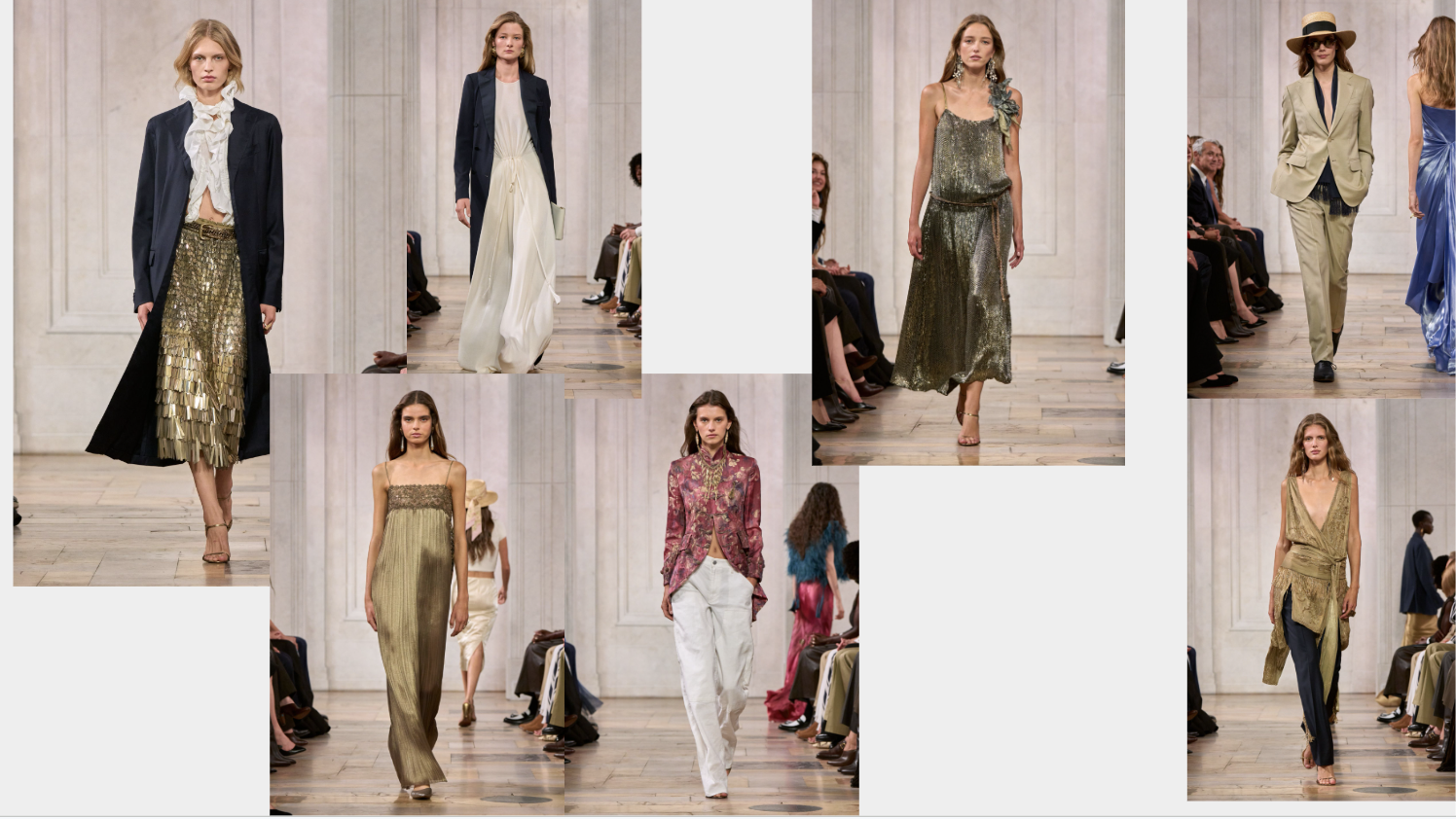
Ralph Lauren continues to prove that personal style is far more interesting than following a trend.
The collection moved between men’s tailoring, brocade, cargo trousers, fringe, metallic skirts, fluid evening dresses and pieces that looked as though somebody had accumulated them over a very well-traveled lifetime.
Which is precisely why it worked.
The brocade jacket with white cargo trousers is probably the easiest styling lesson of the entire week. Take something precious and remove the ceremony. The beautiful jacket does not need the beautiful trouser. The glamorous skirt doesn’t need the glamorous top.
Wear the evening piece at lunch.
Wear the suit with something slightly inappropriate.
Fashion survives when the person wearing it participates.
DVF: COLOR HAS RETURNED FROM ITS SABBATICAL
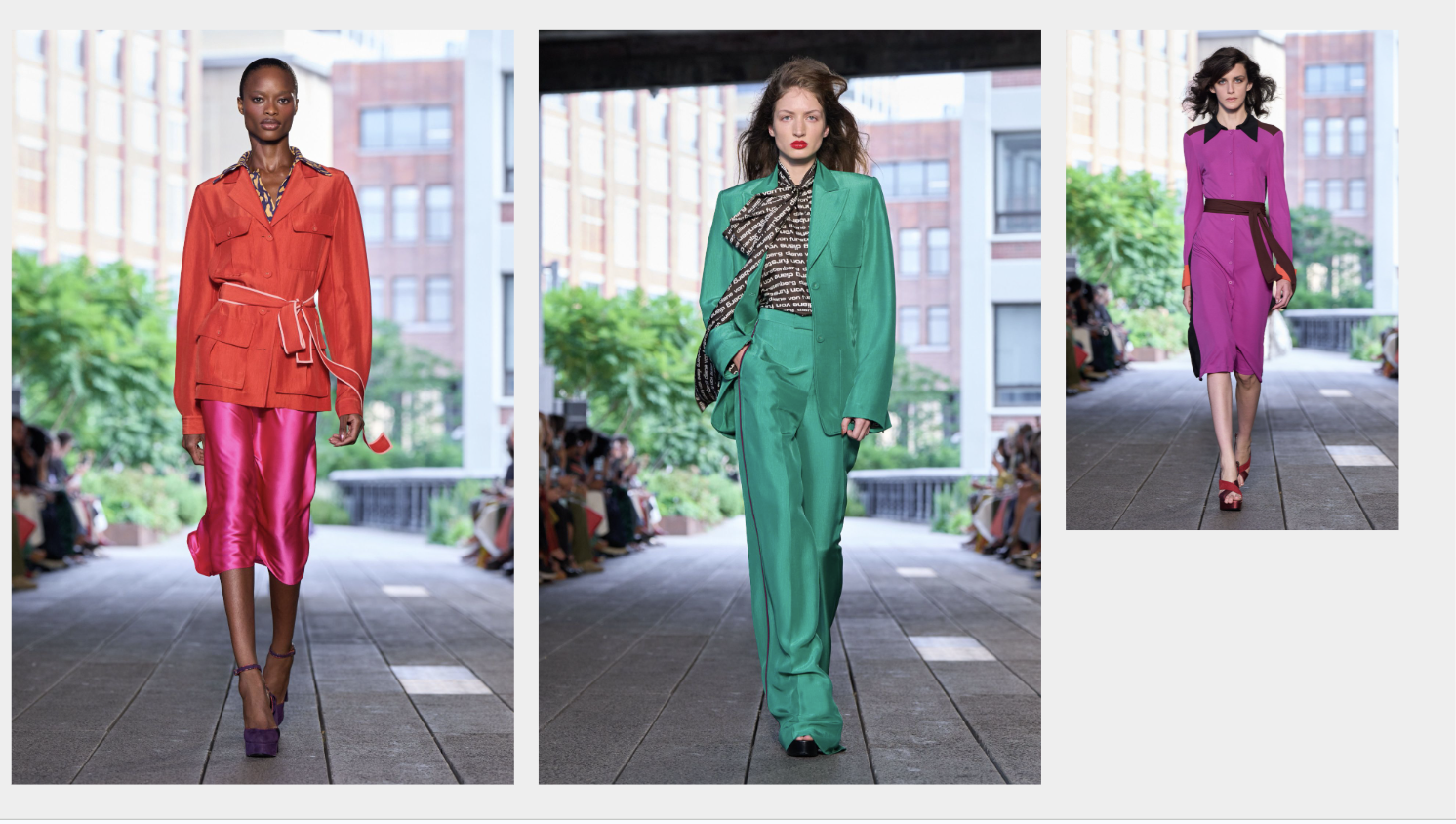
DVF came back to the New York runway for the first time in nearly a decade, now with Henry Zankov directing the creative conversation.
And thankfully, nobody decided that a heritage brand needed to become beige in order to look sophisticated.
Red with fuchsia. Head-to-toe emerald. Magenta.
There is something wonderfully unapologetic about it.
What I liked was that you could still recognize the confidence historically associated with Diane von Furstenberg without feeling that somebody had simply gone downstairs to the archive, found a wrap dress and declared the project complete.
Heritage should be recognizable. It should not become a hostage situation.
PROENZA SCHOULER: RACHEL SCOTT IS LOOSENING THE RULES
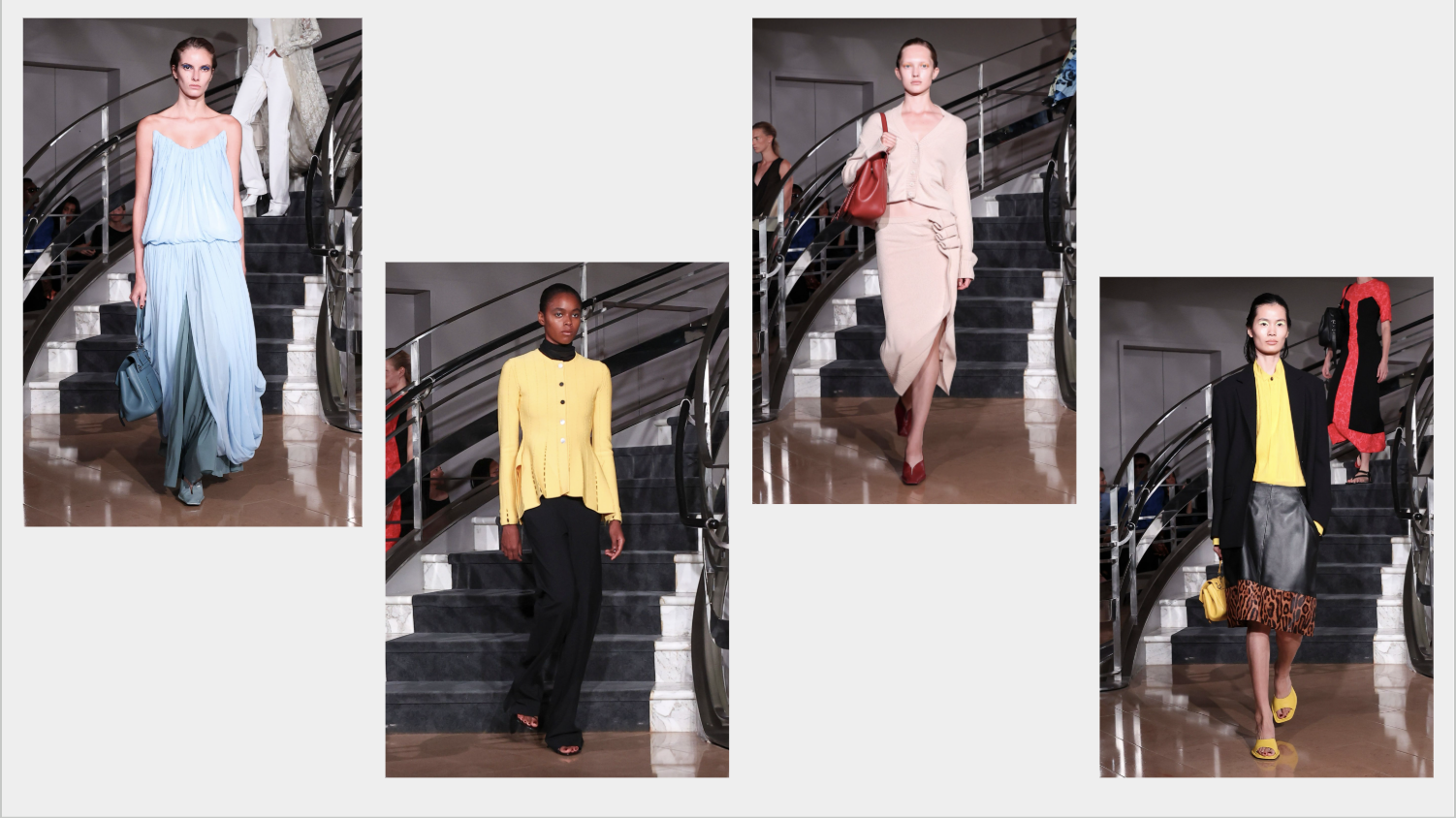
Rachel Scott’s second Proenza Schouler runway felt more confident and freer than her first. She has spoken about watching how women in New York ignore the traditional separation between daytime and evening clothes, and you can see that idea throughout the collection.
A gown doesn’t necessarily require a gala.
A blazer doesn’t necessarily require an office.
And softness does not automatically mean romantic.
I particularly loved the contrast between the incredibly fluid pale-blue dress and the much sharper black-and-yellow tailoring. They belong to the same woman’s wardrobe because real women’s wardrobes are inconsistent.
As they should be.
TORY BURCH: GOOD CLOTHES, SLIGHTLY MISBEHAVED
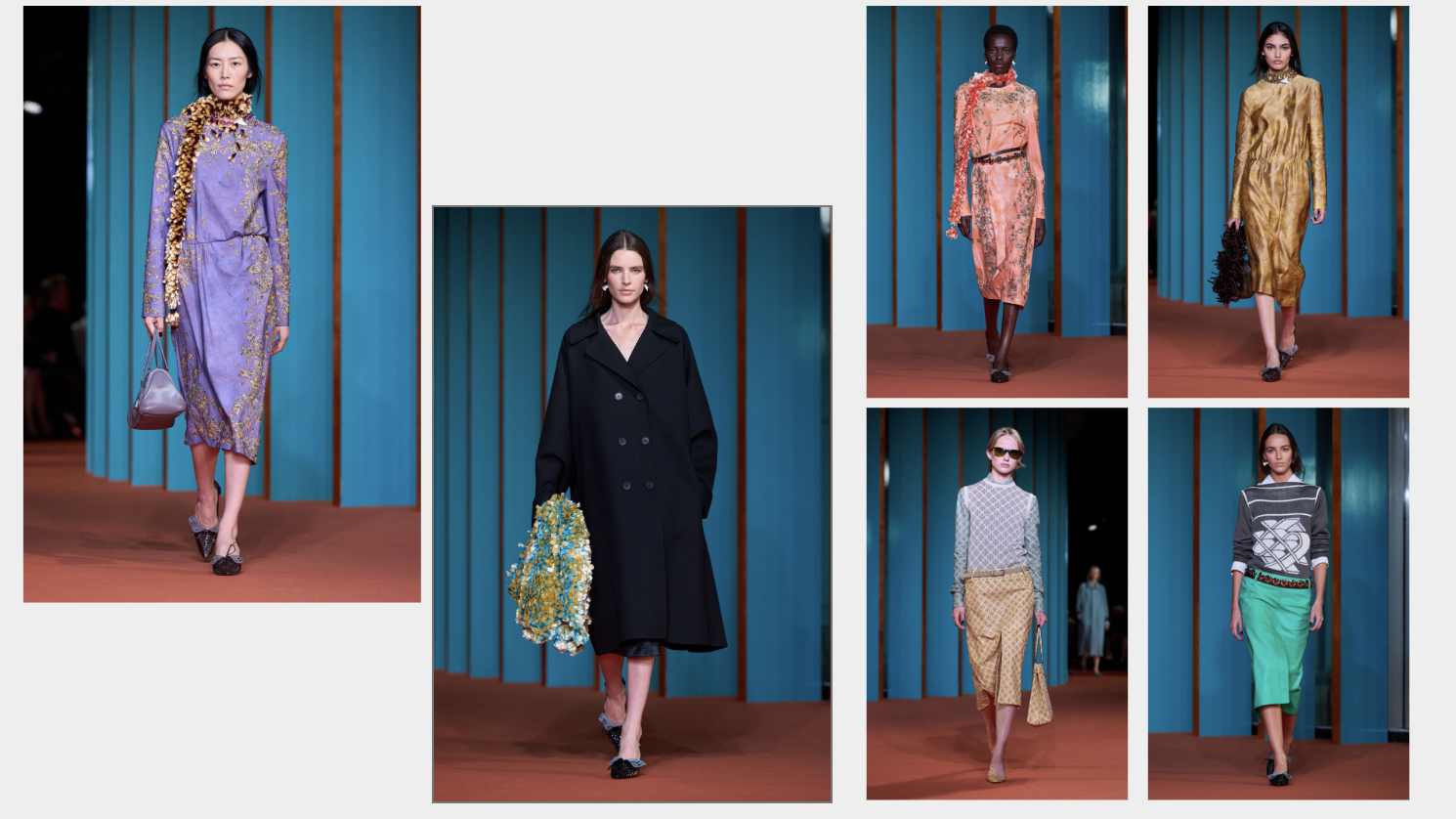
Tory Burch’s evolution remains one of the more interesting stories in American fashion.
There are still recognizable wardrobe pieces underneath everything. A coat. A skirt. A dress. A sweater.
Then something goes slightly wrong.
A strange proportion appears. An enormous decorative object arrives. A familiar fabric behaves unexpectedly. A perfectly normal outfit suddenly acquires enough eccentricity that you want to look twice.
That is the sweet spot.
Nobody needs another perfectly respectable outfit.
We have enough of those.
MICHAEL KORS: THE BASIC IS NOT THE PROBLEM
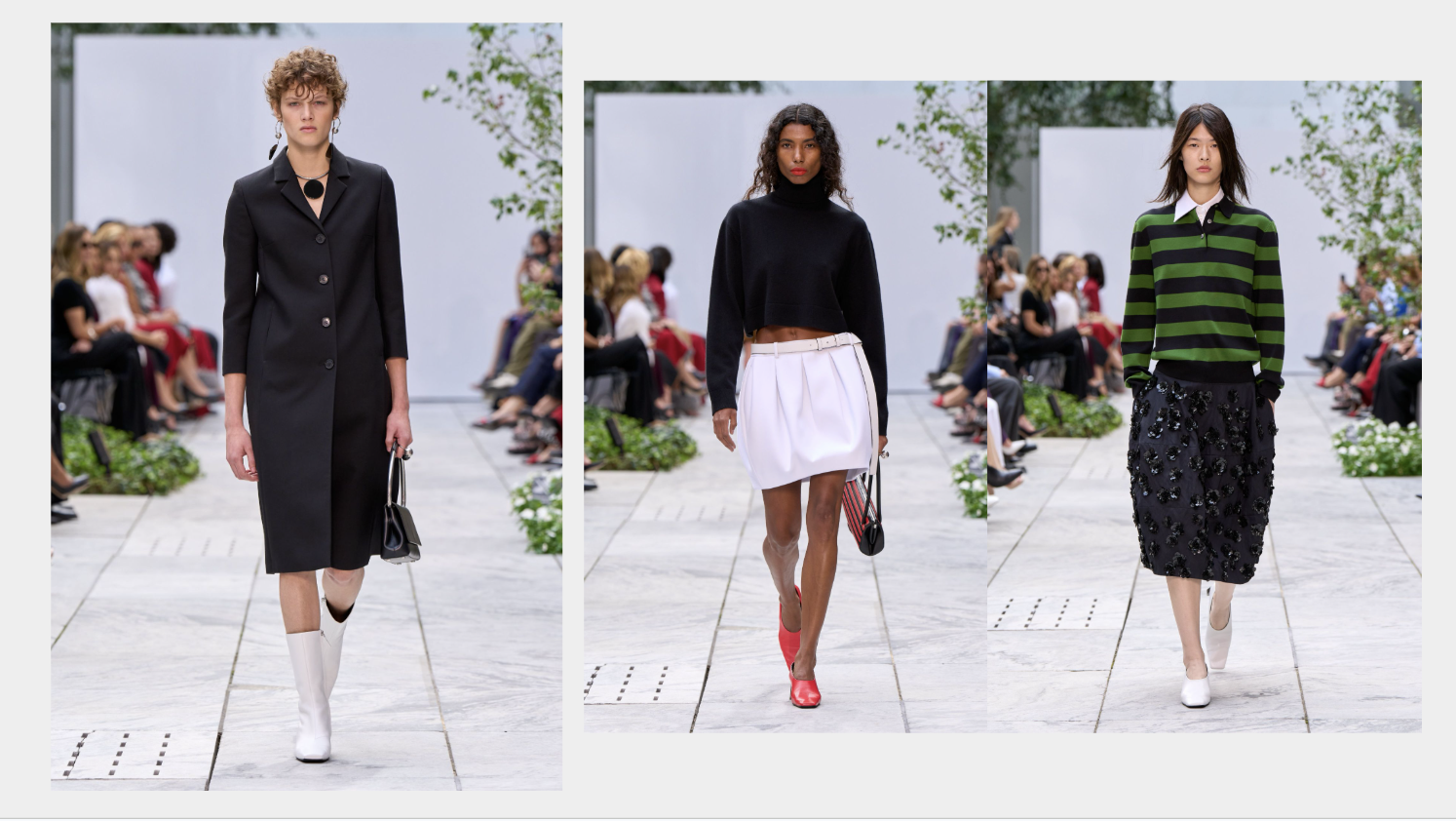
Michael Kors went modernist this season, showing at MoMA’s Sculpture Garden and looking toward figures including Edie Sedgwick, Nico, Calder and Matisse.
But what interested me was how basic many of the individual pieces actually were.
Black coat.
Black turtleneck.
White skirt.
Striped knit.
Then one decision changes the entire proposition.
Red shoes.
Extreme proportion.
Embellishment where you don’t expect it.
This is something I constantly tell clients: your wardrobe does not need 75 extraordinary objects. Sometimes it needs one extraordinary decision.
Much cheaper, incidentally.
BRANDON MAXWELL: AMERICAN SPORTSWEAR WITHOUT THE TED TALK
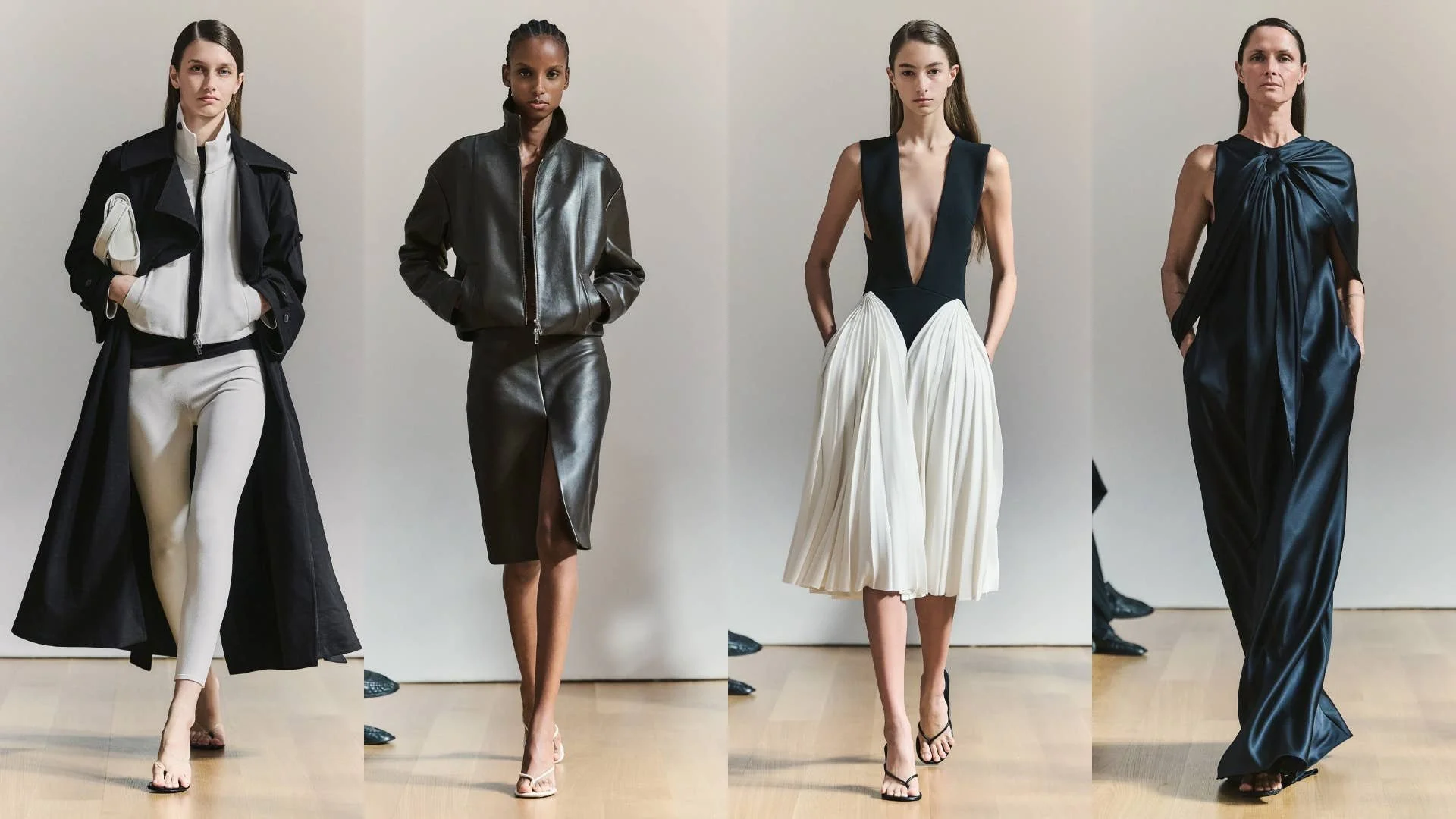
Brandon Maxwell returned to the runway after taking a season away and revisited ideas from his own history—the catsuit, clean tailoring, straight trousers, uncomplicated American sportswear.
And I loved the restraint.
Black. White. Khaki. Grey. One shock of blue.
You could imagine the clothes existing after the show is over, which lately has become almost rebellious.
The yellow trouser with the grey blazer is exactly the kind of styling I love because neither piece is screaming. Together, they become memorable.
And the long blue textured dress does not need seven necklaces, twelve bracelets and a personality disorder to prove that it is eveningwear.
It is enough.
MONSE: PERFECTLY IMPERFECT
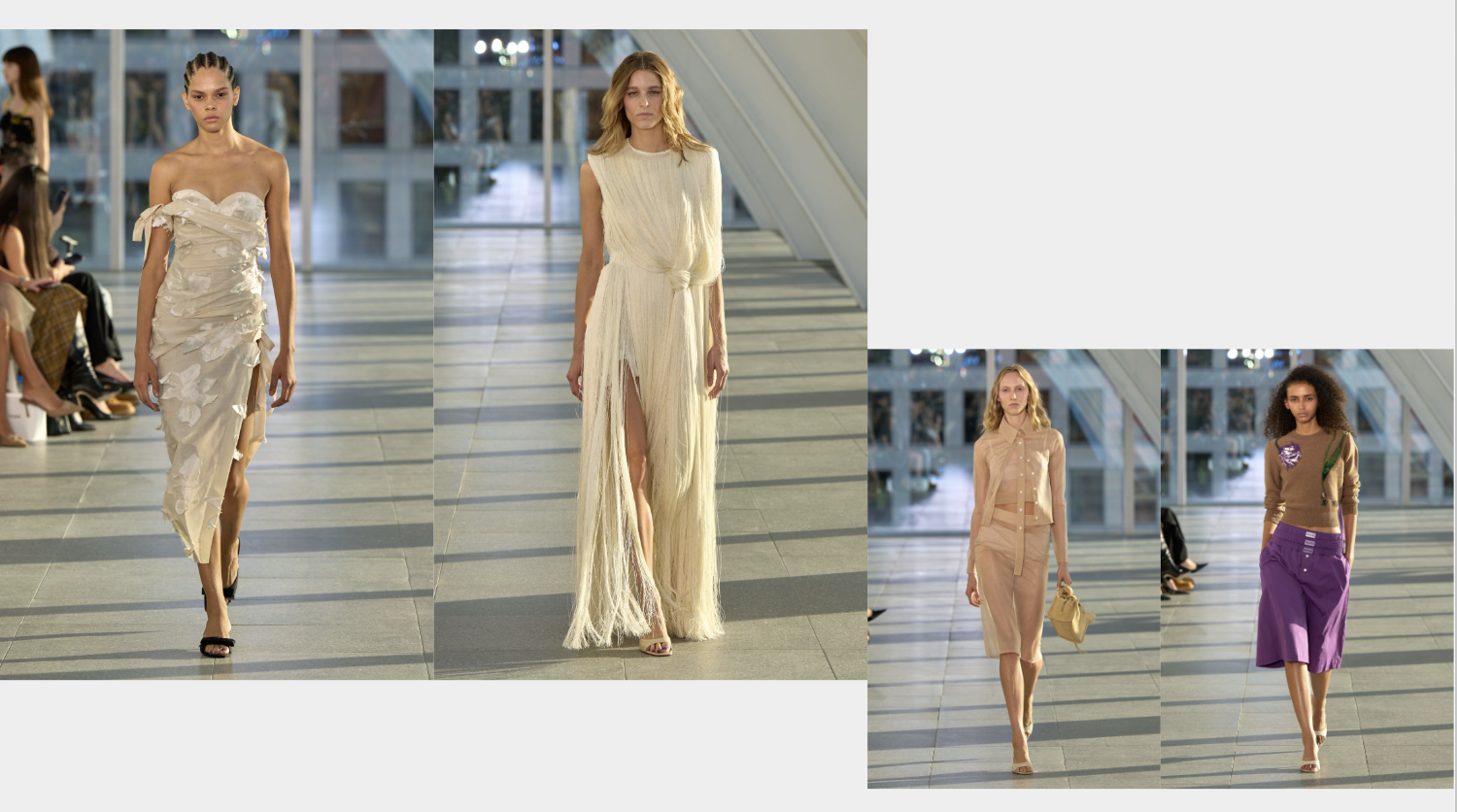
Monse reminded me how much more interesting clothes become when they look slightly interrupted.
A sheer neutral set that doesn’t feel overtly sexy. Purple boxer-like shorts under a very proper sweater. A romantic dress that looks as though somebody started taking it apart and then wisely stopped halfway through.
This is where the “undone” conversation becomes useful.
Undone does not mean sloppy.
It means leaving evidence that a person is inside the clothes.
ALTUZARRA: ROMANCE NEEDS A LITTLE DAMAGE
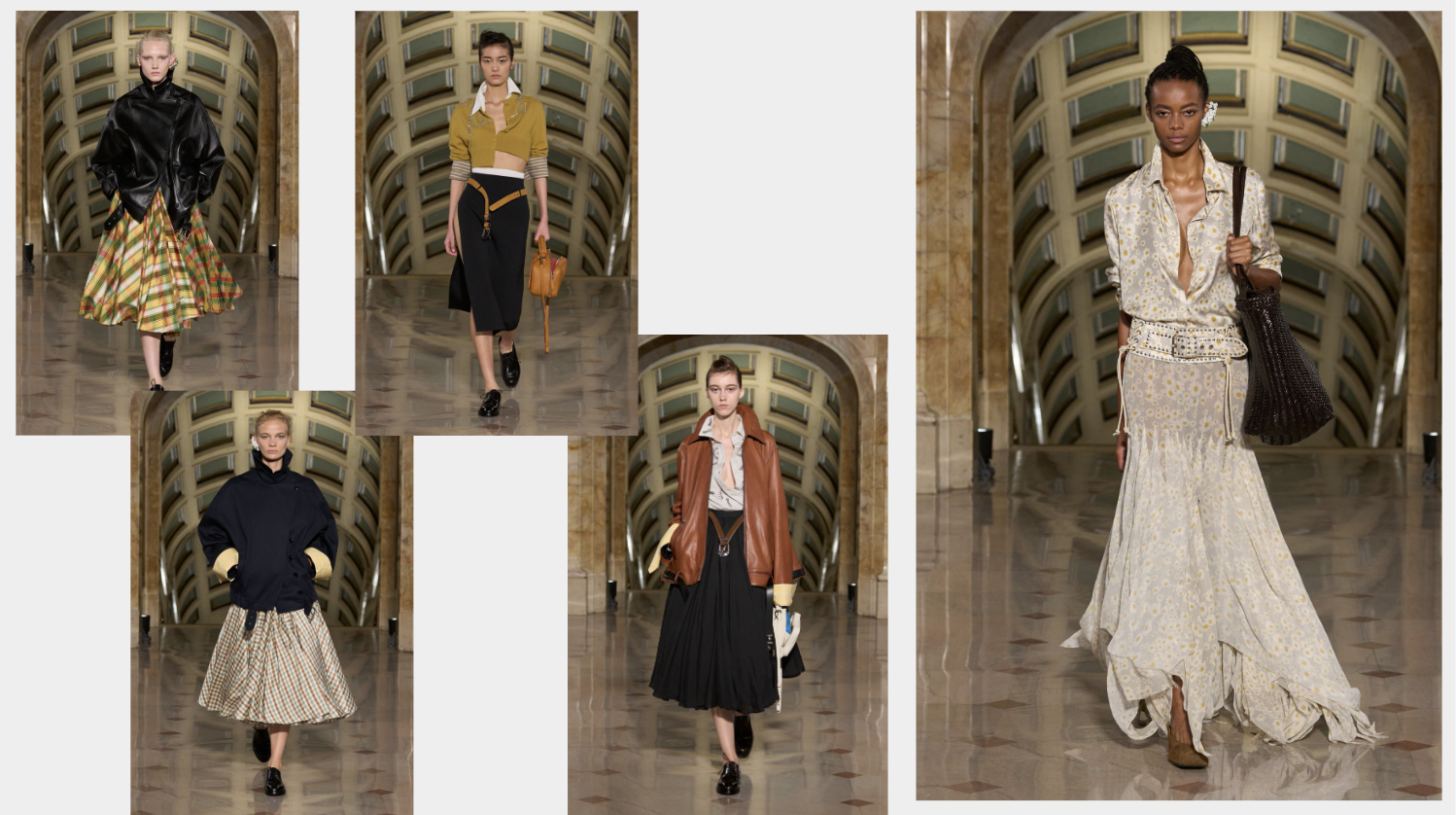
Altuzarra gave us one of my favorite combinations of the week: feminine shapes with tough elements.
Full skirts with oversized leather.
Soft florals with men’s shoes.
Cardigans with harness-like belts.
Pretty, but never fragile.
This is probably one of the easiest ideas to steal from the runway without buying a single thing: when something becomes too sweet, interrupt it.
Add a men’s jacket. A flat shoe. Leather. Something slightly severe.
Otherwise we are dangerously close to becoming decorative pillows
TIBI: WEIRD NORMAL CLOTHES, MY FAVORITE CATEGORY
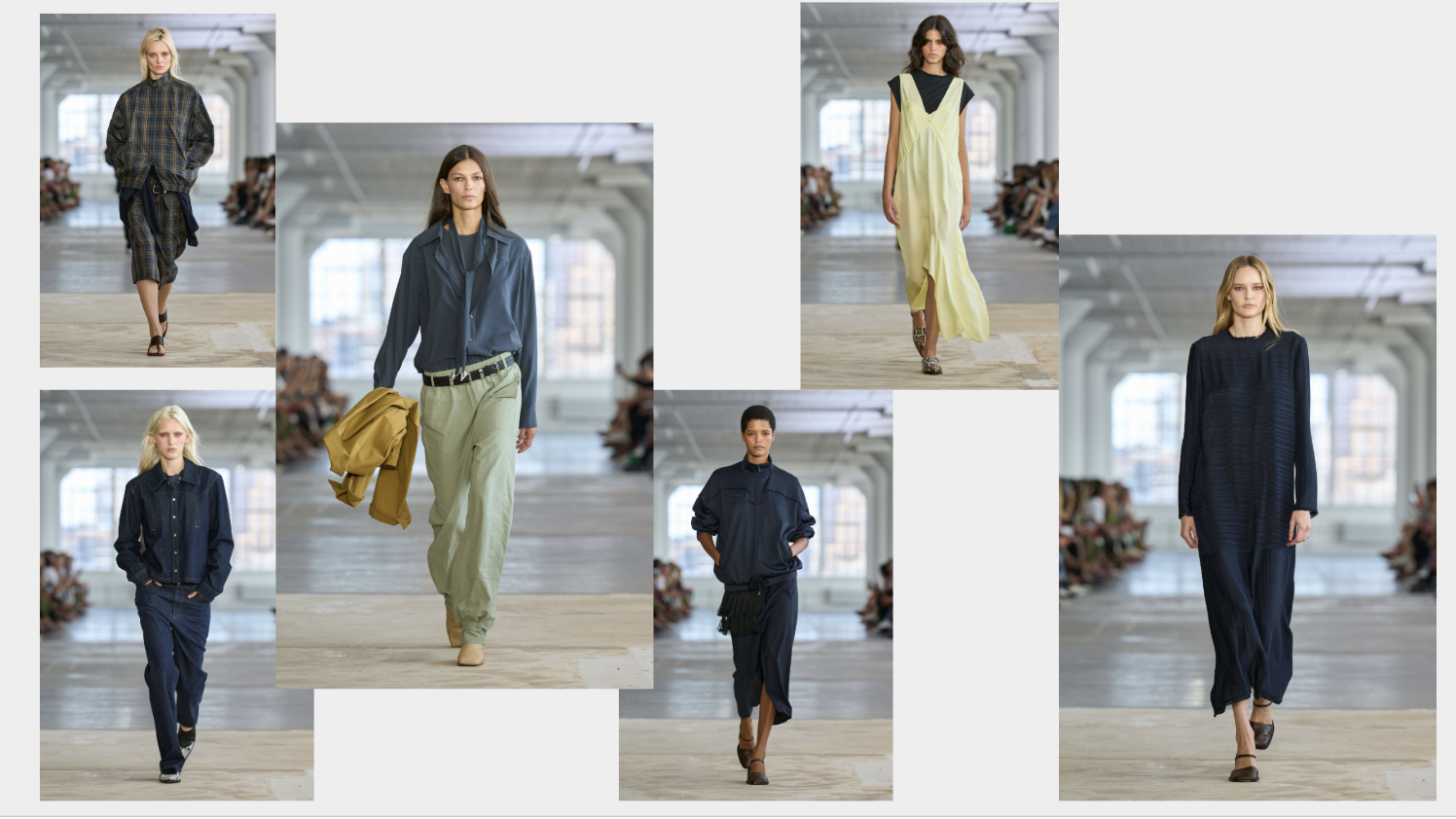
Amy Smilovic described the season through Western references, but fortunately nobody came galloping down the runway dressed as a saloon owner.
Instead there were Western shirts, denim, plaid, functional trousers and fringe worked into Tibi’s existing language of proportion and practicality.
This is what I mean by “weird normal clothes.”
You understand what the garment is.
You just haven’t seen it worn exactly like that before.
For people who already own a substantial wardrobe, this is much more useful than being told we need an entirely new one every six months.
SABYASACHI: MORE IS STILL A PERFECTLY VALID POSITION
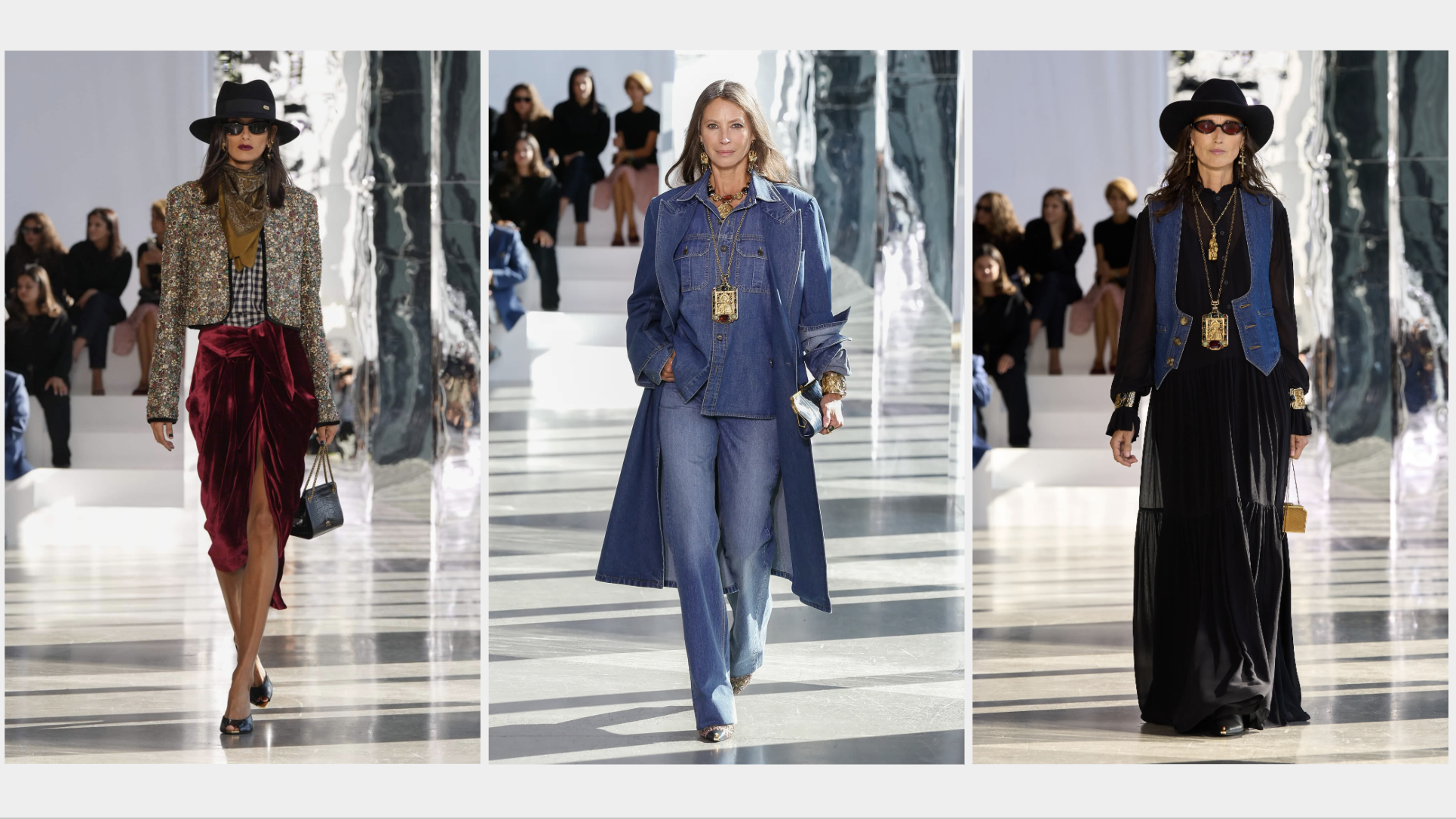
Sabyasachi returned to New York for his first show here in 20 years, describing the collection as Western clothing seen through an Indian lens.
And thank God somebody still believes embellishment can exist without apologizing.
The embroidery, brocade, satin, color and jewelry were rich, but the silhouettes themselves often remained recognizable. That balance mattered.
My favorite part is that you could pull one of those extravagant jackets out of the show and put it with the simplest trousers imaginable.
Again: the extraordinary item becomes more extraordinary when you don’t surround it with competition.
KHAITE: THE KHAITE WOMAN DISCOVERS ROMANCE
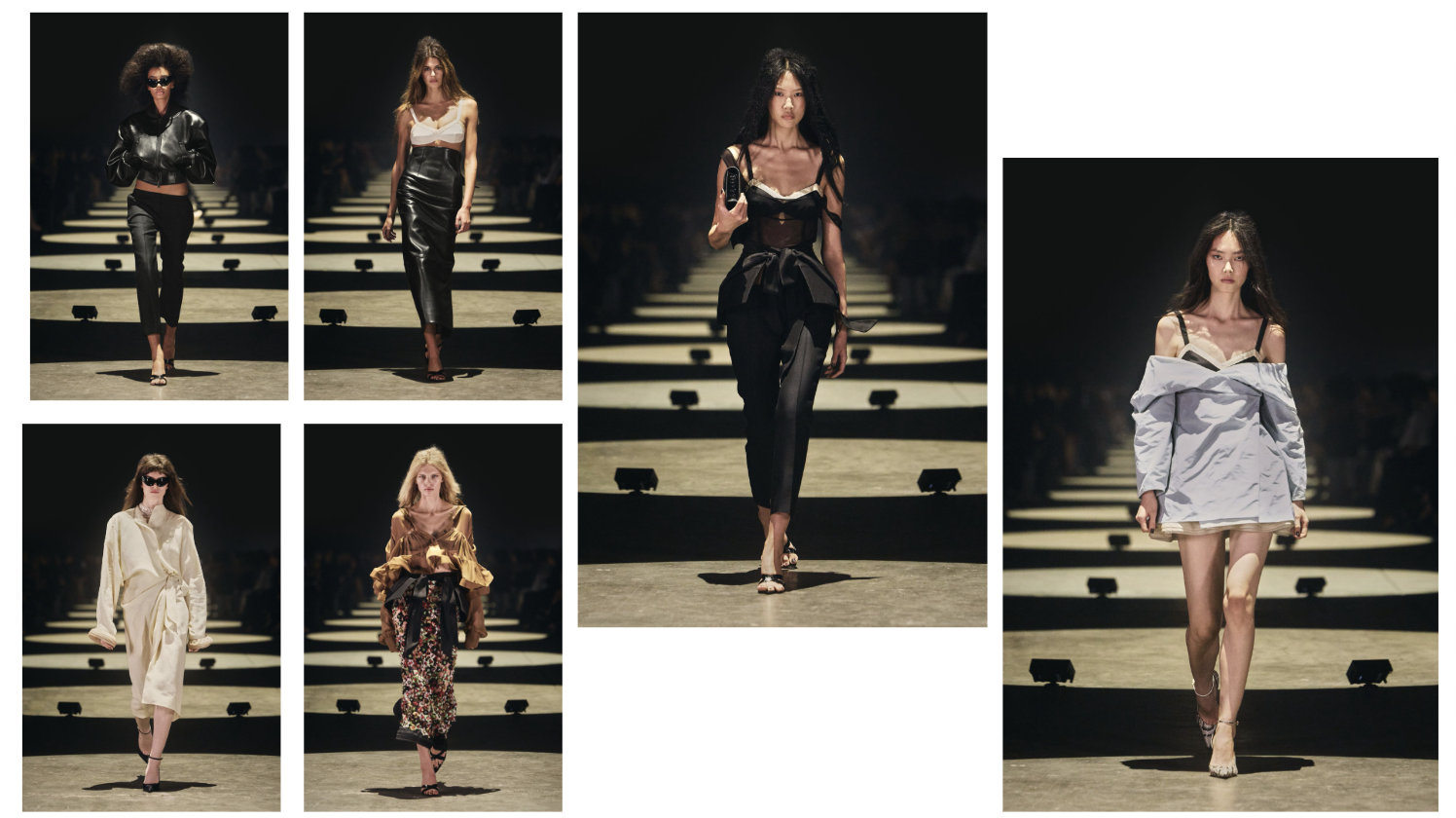
This may have been one of the biggest shifts.
Catherine Holstein described a softer Khaite this season, with antique-lingerie references, lace, pastel shifts and diaphanous pieces alongside the leather and severe tailoring the brand is known for.
The opening white bra with the high-waisted black leather skirt tells you almost everything.
Hard and soft.
Lingerie and leather.
Something intimate against something almost armored.
I have always loved that tension, because neither side gets to become predictable.
Apparently even the Khaite woman has feelings now.
We’re all adjusting.
ULLA JOHNSON: ROMANCE WITHOUT THE COSTUME
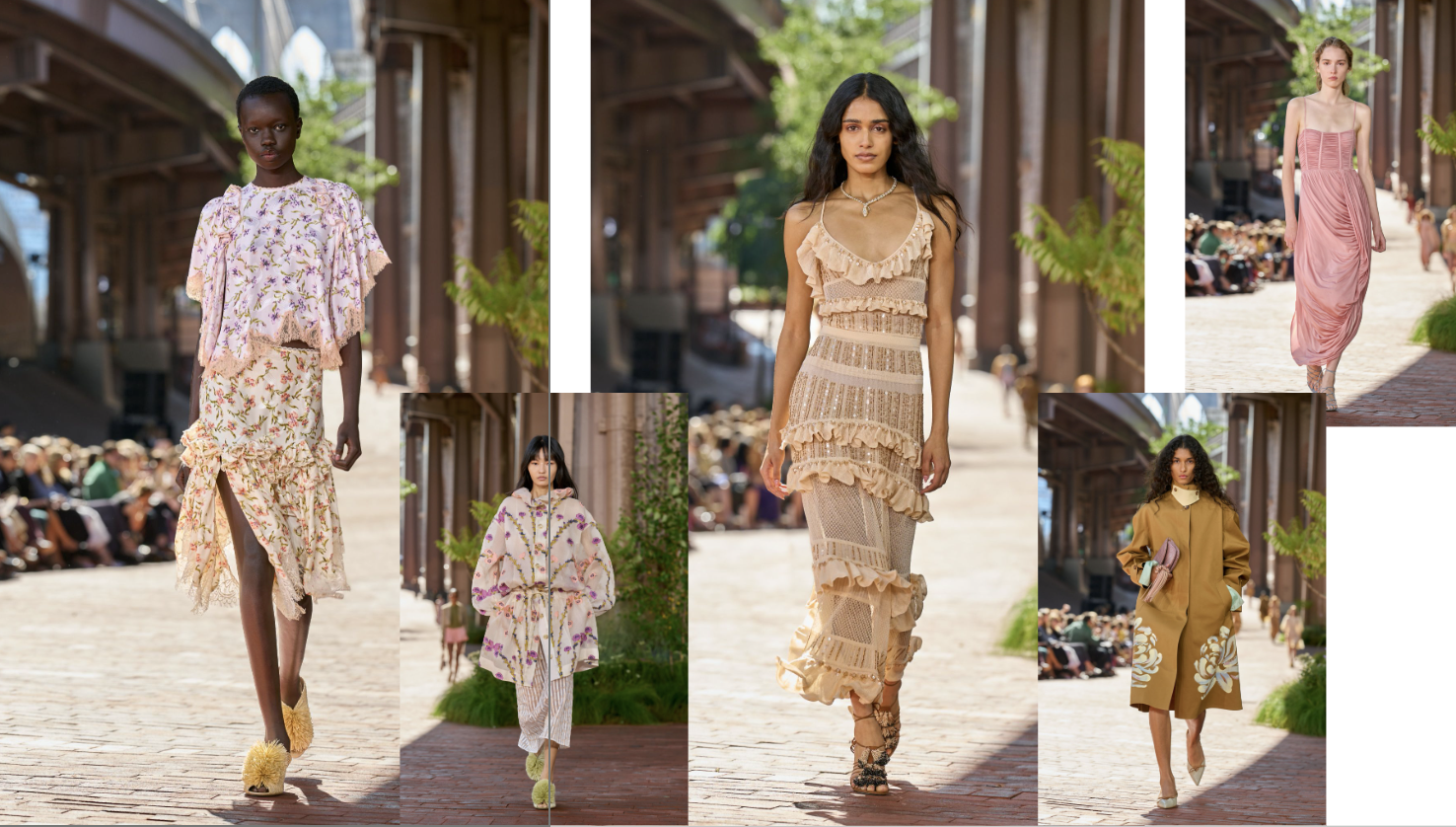
Ulla Johnson showed beneath the Brooklyn Bridge in Gotham Park, working with transparency, movement, hand-painted details and a largely pastel spring palette.
The important distinction for me was that the romance didn’t feel historical.
The lace and florals weren’t saying, “Please place me in a field at sunset holding a wicker basket.”
They felt urban.
That’s much harder.
And probably much more useful.
