
The New Masculinity: Six Collections That Defined Men's Fashion Week SS27
Every Men's Fashion Week, we rush to crown a winner. The best show. The best tailoring. The next big thing.
This season felt different.
Instead of chasing a single trend, designers explored different versions of masculinity. Some looked toward craftsmanship, others toward nostalgia, some embraced glamour, while others quietly questioned why men still have such rigid dress codes in the first place.
What united the strongest collections wasn't one silhouette or one color. It was confidence. None of these designers seemed interested in dressing a man to impress someone else. They were dressing him to become more himself.
Here are the collections that stayed with me.
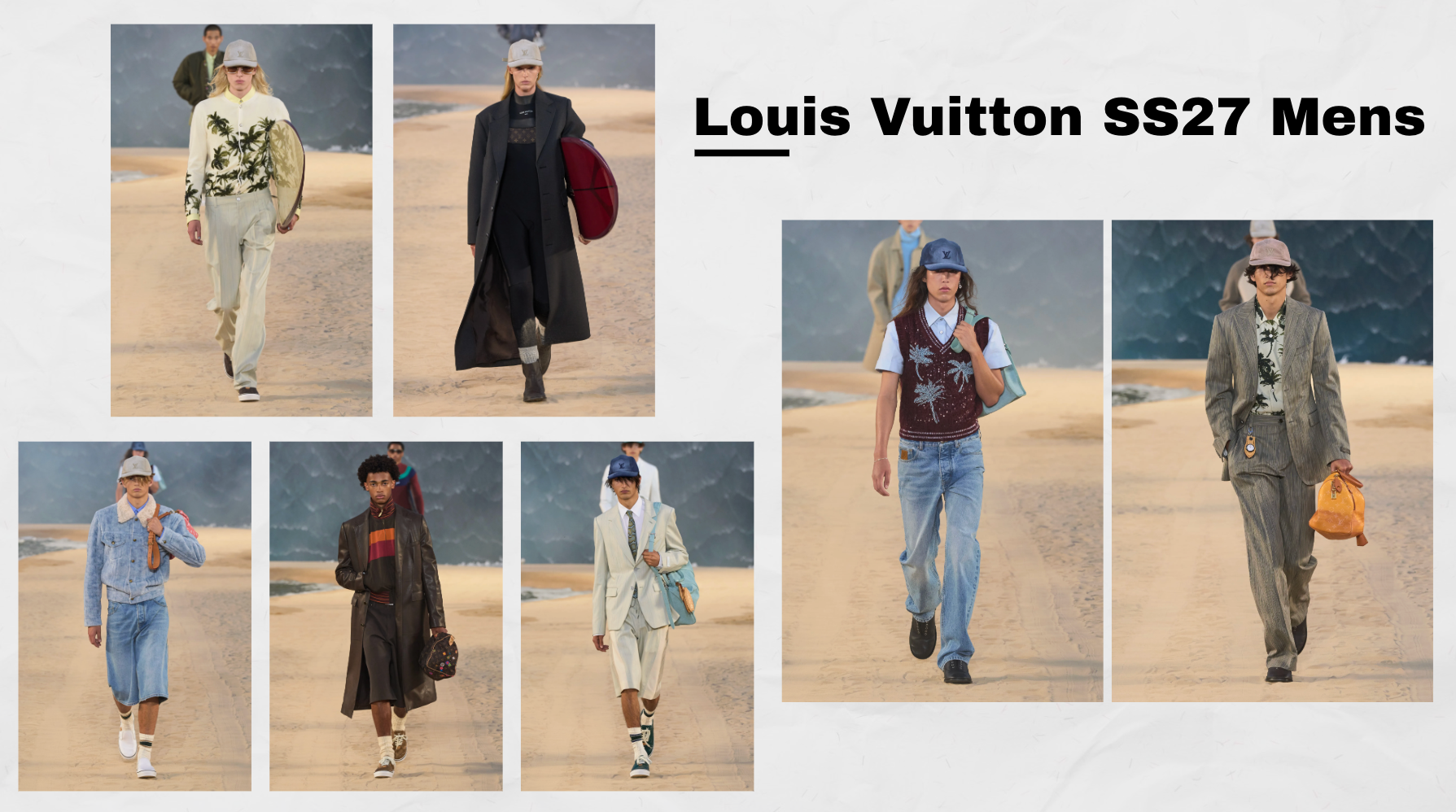
The modern traveler grows up.
There is something unmistakably cinematic about Louis Vuitton under Pharrell Williams. Travel remains the foundation of the house, but this season the journey felt quieter and more personal. Gone was the need for spectacle. Instead, we saw wardrobes built for someone who collects memories rather than logos.
Palm tree jacquards, washed tailoring, varsity knits, relaxed denim, oversized luggage and soft tropical references created a wardrobe somewhere between Paris, Miami, Tokyo and a forgotten beach club from the 1970s. The styling mixed formal tailoring with casual sportswear almost effortlessly—shorts appeared beneath jackets, knit vests over shirting, oversized bags beside elegant suits.
Most importantly, Vuitton continues proving that luxury today isn't about dressing formally. It's about making relaxed clothing feel incredibly expensive.
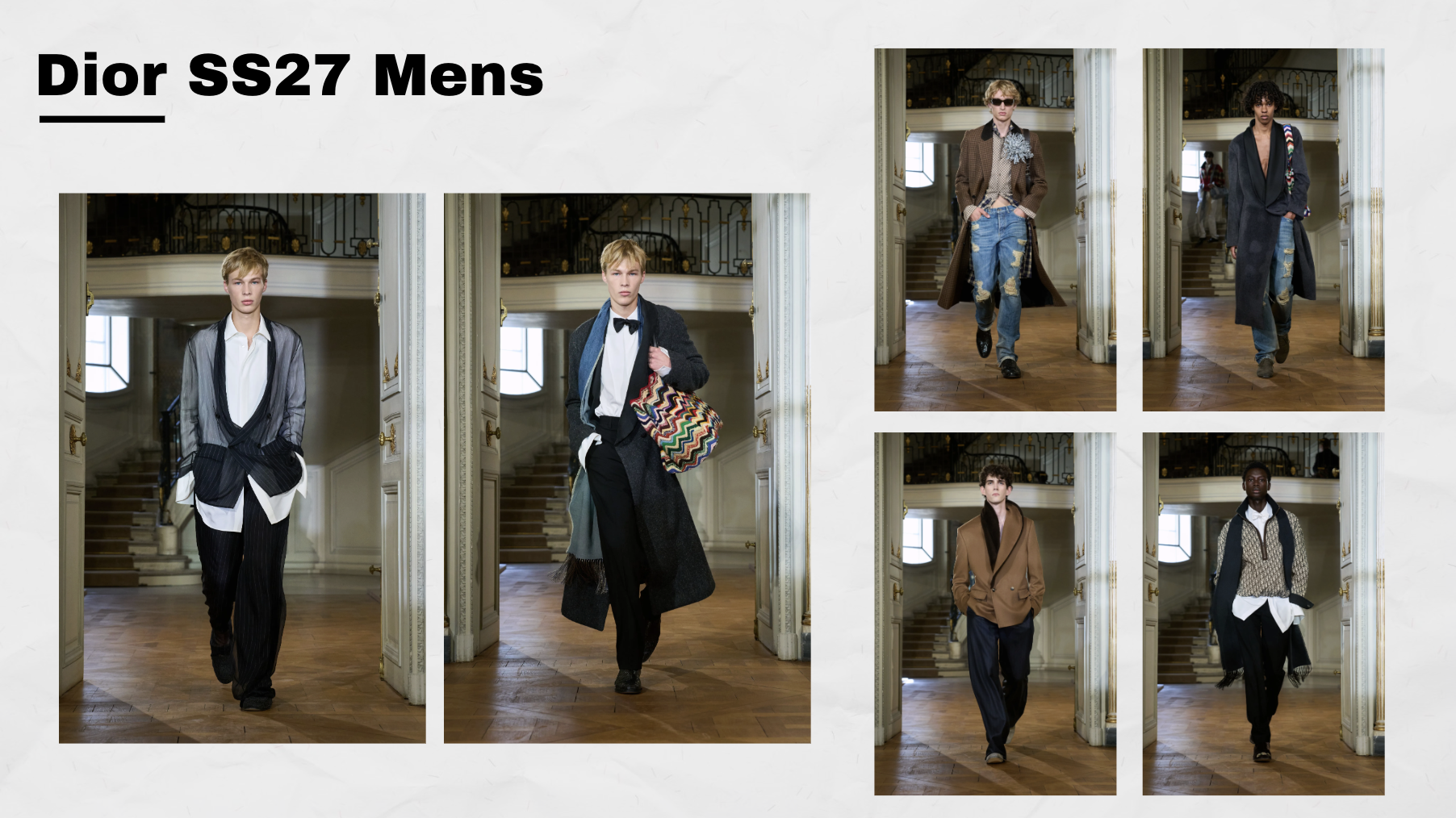
Jonathan Anderson writes a new chapter.
Jonathan Anderson's first Dior collection felt less like a debut and more like an opening sentence.
Rather than rejecting Kim Jones' polished masculinity, Anderson expanded it with his own fascination for layering, proportion and intellectual dressing.
Classic tailoring met oversized shirting. Sweeping coats framed distressed denim. Formalwear collided with knitwear, scarves and hand-crafted accessories. There were echoes of British aristocracy, school uniforms and bohemian artists all existing inside the same wardrobe.
Anderson understands something many designers forget: luxury becomes interesting when it carries contradiction.
His Dior man isn't perfectly dressed.
He's endlessly curious.
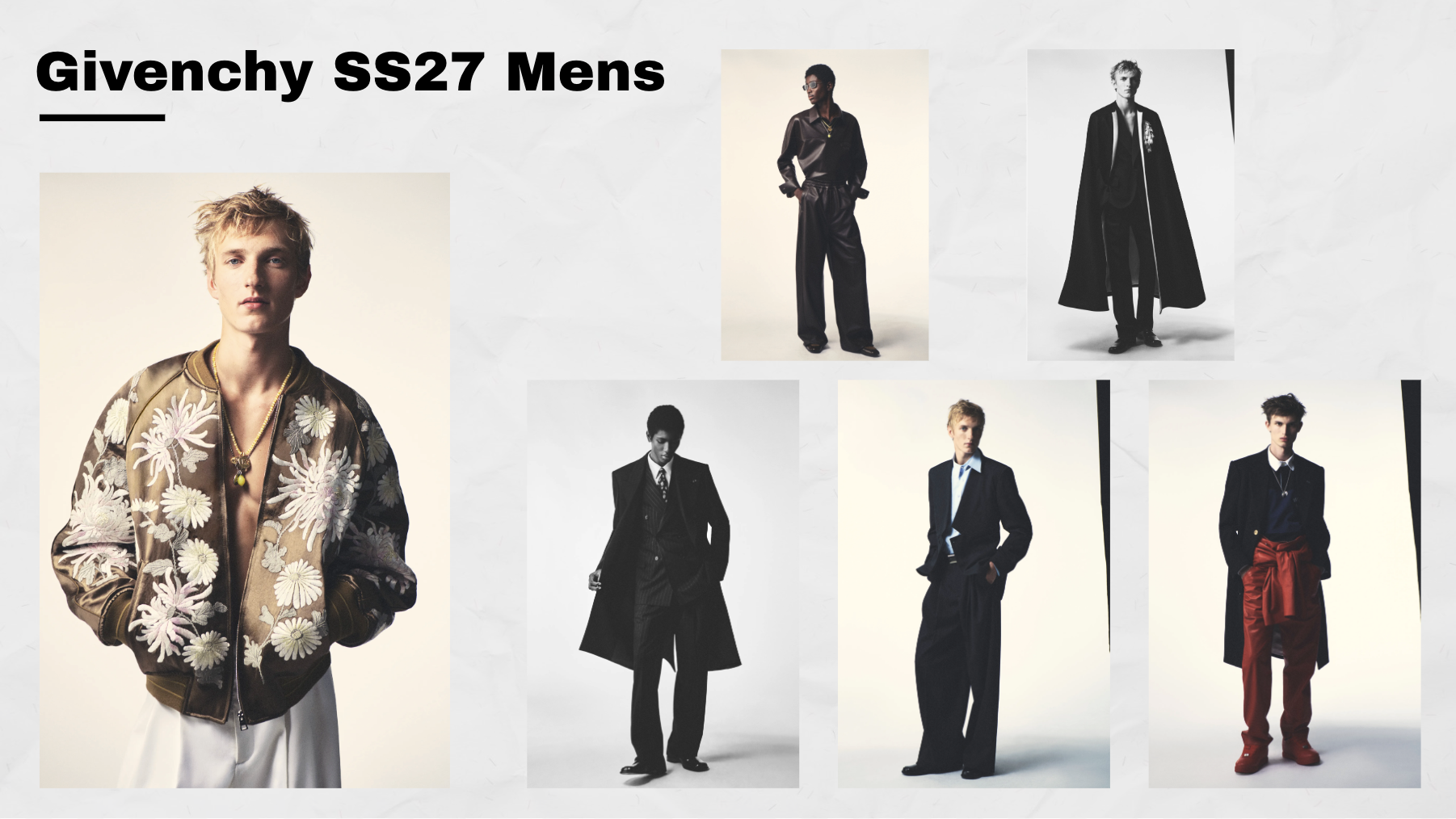
The return of elegance.
Sarah Burton's arrival immediately shifted the conversation around Givenchy.
Rather than reinventing the house overnight, she returned to its foundations: immaculate tailoring, exquisite embroidery, sharp eveningwear and couture-level construction.
The floral bomber became one of the strongest outerwear pieces of the season—not because it was loud, but because every embroidered flower felt handcrafted rather than decorative.
Throughout the collection, sharp black tailoring met softer romantic details, creating a dialogue between masculinity and refinement that Hubert de Givenchy himself would likely recognize.
This wasn't about nostalgia.
It was about reminding fashion what elegance actually looks like.
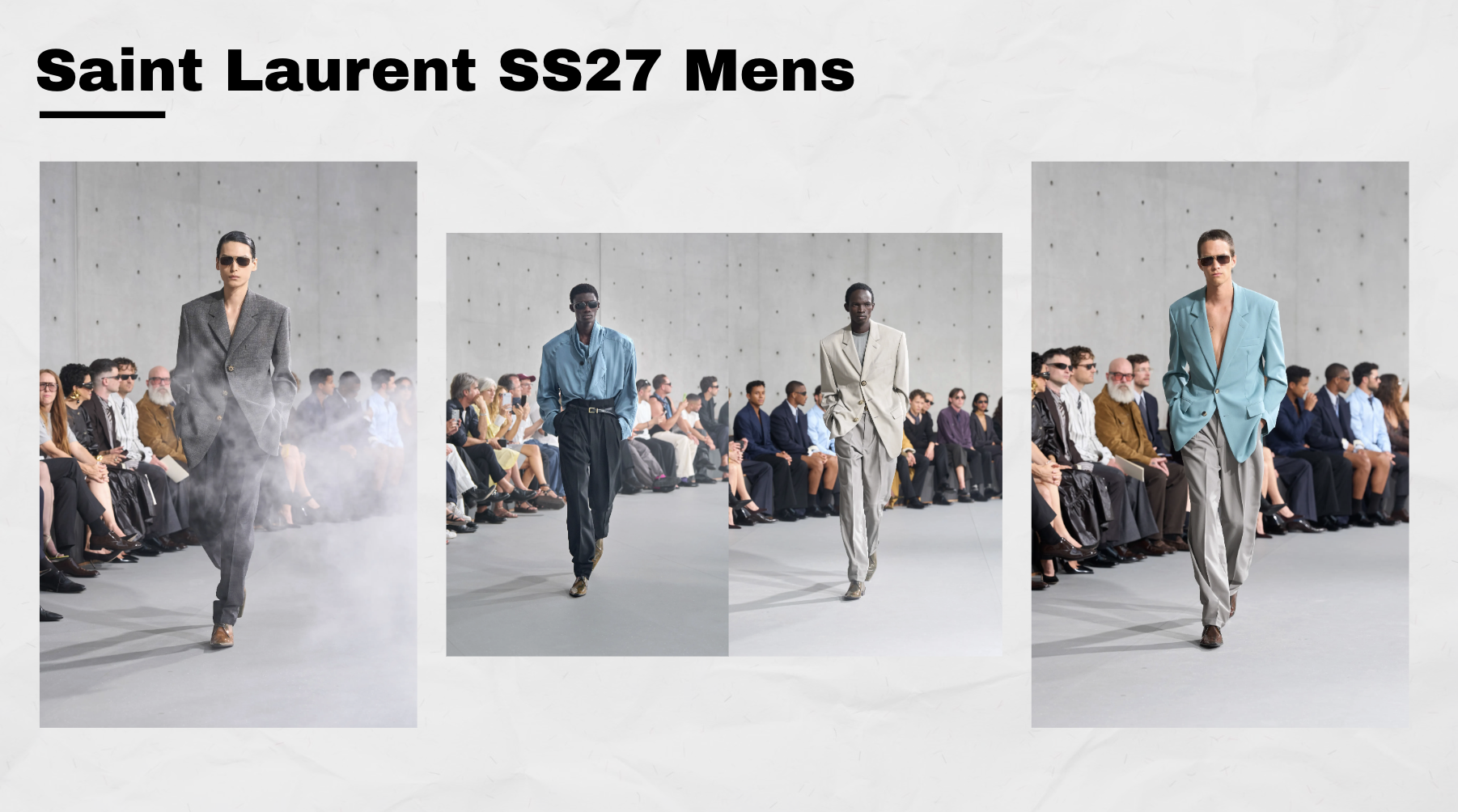
Anthony Vaccarello continues to perfect power dressing.
Few designers understand silhouette the way Vaccarello does.
Shoulders remained architectural, waists relaxed, trousers fluid, while muted greys, stone, powder blue and charcoal replaced black as the dominant language. The result felt lighter than previous seasons but no less commanding.
There was almost no decoration.
No distractions.
Just exceptional tailoring and extraordinary proportions.
Saint Laurent continues to define the modern suit—not as business attire, but as armor for people who appreciate understatement over spectacle.
Hollywood finally learns restraint.
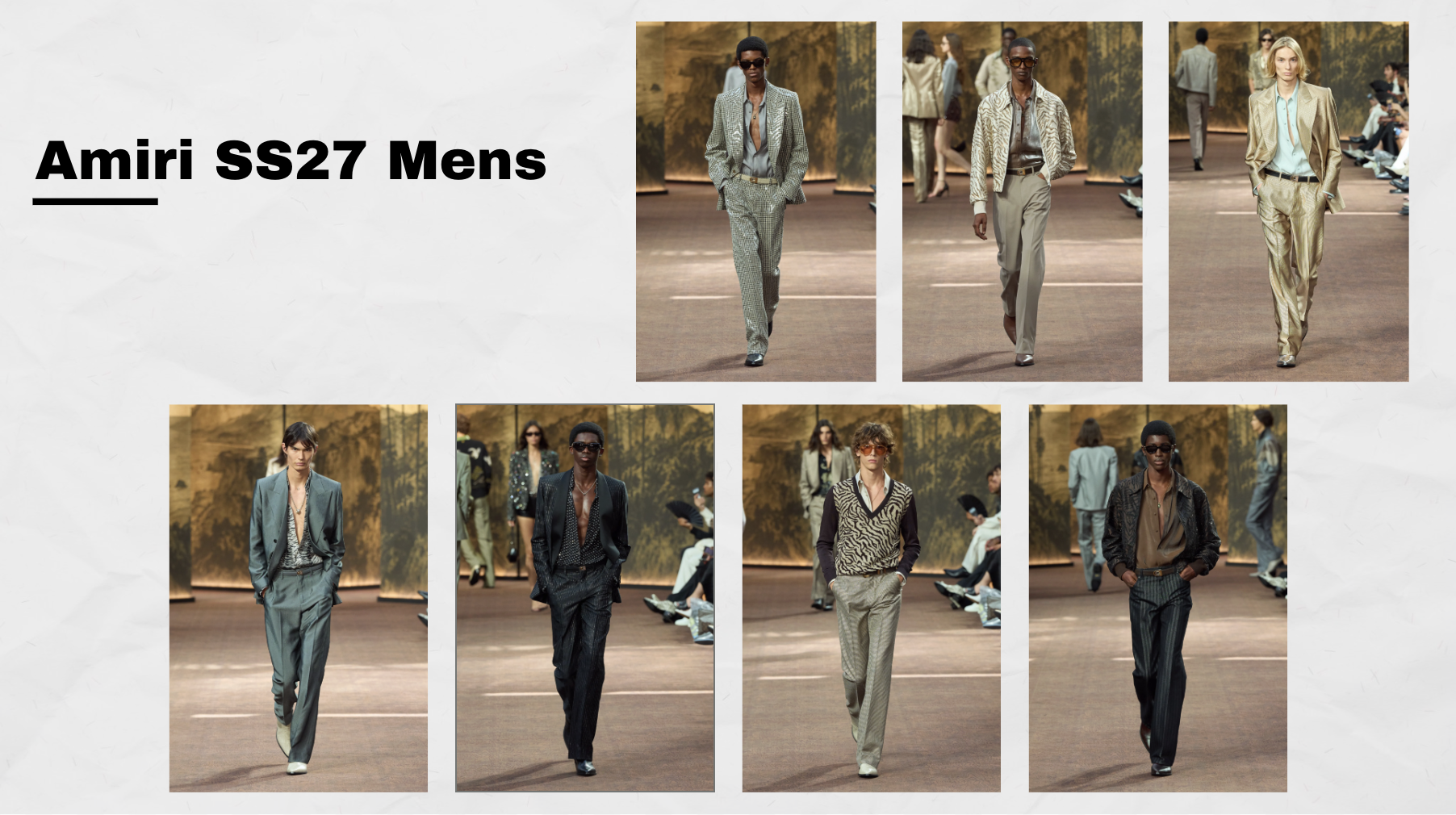
Mike Amiri has mastered a language few designers understand: glamour without noise.
The collection borrowed from old Los Angeles elegance—silk shirts left unbuttoned, shimmering tailoring, relaxed suiting and soft neutrals—but stripped away everything unnecessary.
Instead of rock-star excess, this season felt confident enough to whisper.
The jackets were fluid, trousers generous, shirts sensual without becoming theatrical. Even the metallic fabrics never crossed into costume territory. This was eveningwear designed for daylight, proving that luxury often works best when it stops trying so hard.
Poetry disguised as clothing.
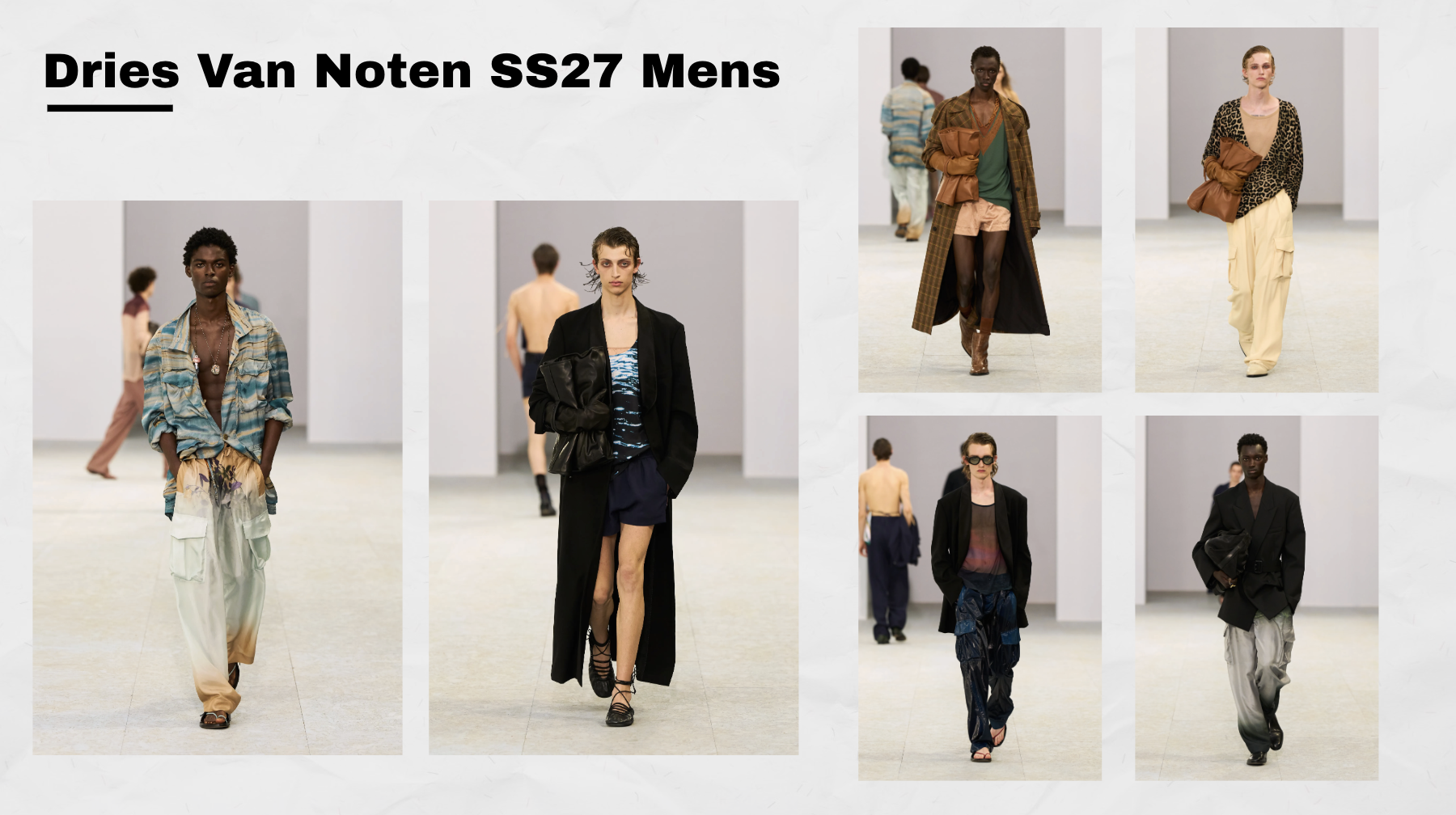
If one collection captured emotion this season, it was Dries Van Noten.
The clothes looked as though they had lived a life before reaching the runway. Faded florals, washed silks, oversized coats thrown over tiny shorts, transparent knits and unexpected animal prints created an effortless tension between fragility and strength.
Nothing screamed for attention. Instead, every look invited you to come closer.
This is fashion for someone who appreciates texture more than logos, proportion more than trends, and personality more than perfection. Even the oversized leather clutch felt less like an accessory and more like something accidentally carried home after an unforgettable night.
Dries continues to remind the industry that romance never truly disappears—it simply evolves.
Final Thoughts
If there was one lesson from Men's Fashion Week SS27, it is that fashion is finally moving beyond the tired conversation of "masculine" versus "feminine."
The strongest collections embraced vulnerability, softness, craftsmanship, movement and individuality without sacrificing confidence. Tailoring became relaxed. Luxury became quieter. Formalwear became personal again.
Perhaps the biggest trend wasn't a color or a silhouette at all.
It was character.
And after years of fashion chasing algorithms, aesthetics and viral moments, character feels wonderfully radical again.
love, Olya
